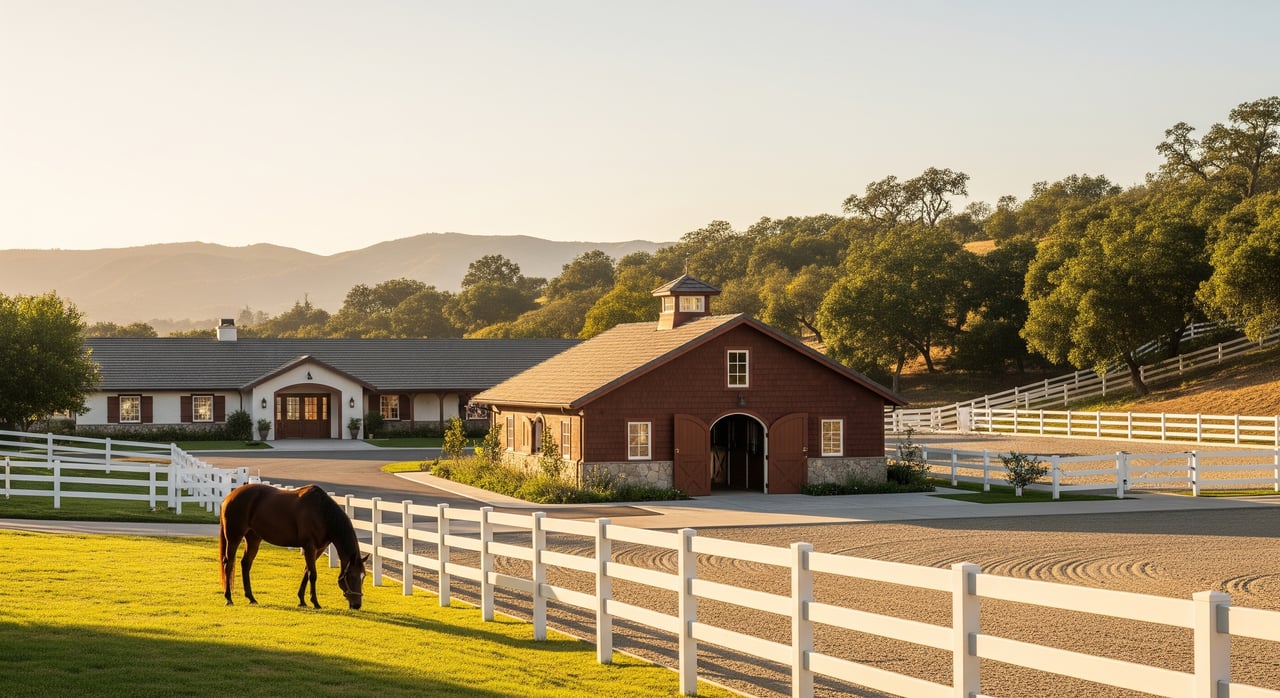
Guide to Living the Shadow Hills Equestrian Lifestyle
December 18, 2025
December 18, 2025
Imagine waking up in Los Angeles, saddling up at home, and riding out within minutes. If you are drawn to the equestrian lifestyle but new to keeping horses on your own property, Shadow Hills can be a great fit. You want the rural feel, usable land, and smart upgrades that keep both you and your horses safe and happy. In this guide, you will learn what to look for in a Shadow Hills horse property, how local rules affect your plans, realistic day-to-day responsibilities and costs, and the steps that help you buy with confidence. Let’s dive in.
Shadow Hills sits in the northeastern San Fernando Valley within the City of Los Angeles. The area is known for larger lots, a semi-rural character, and a strong equestrian tradition. You will see properties with barns, paddocks, and arenas, along with hillside parcels that deliver views and privacy.
Expect a mix. Some homes sit on smaller residential lots that can support a single horse with the right setup. Many parcels are one acre or more and function like ranchettes, often with existing equestrian improvements. There are also larger ranch holdings and hillside terrain. Usable acreage varies widely, so evaluate flat areas, access, and current improvements rather than assuming every parcel is horse ready.
Proximity to multi-use trails is a major draw, but access is not uniform. Some streets and parcels connect easily to local trail networks. Others sit behind private gates or lack nearby bridle paths. For practical riding, consider how you will haul out. Street width, driveway grade, gate width, and turnaround space affect how smoothly trailers, hay trucks, and emergency vehicles can reach you.
Keeping horses at home is governed by layers of rules. Verifying them early protects your timeline and budget.
Before you write an offer, ask the seller and your agent for:
Look beyond total lot size to identify level, usable areas for turnout and riding. Walk the entire parcel. Check drainage patterns and seasonal runoff. Poor drainage leads to mud, health issues, and arena damage. Soil type matters too. Heavy clay can compact and hold water, so plan for surfacing and drainage solutions where needed.
Ask for the permit history for barns, tack rooms, arenas, and shelters. Unpermitted structures can complicate insurance and resale. Inside each structure, assess stall size, ventilation, flooring, and drainage. Look for signs of rot, sharp edges, protruding hardware, and structural wear that could injure a horse. Feed and hay need dry, secure storage to manage moisture and discourage rodents.
Fencing should be equine safe and in good repair. Post-and-board, pipe, high-tensile, or equine-rated rail can all work if maintained. Avoid loose wires and broken rails. Confirm gate width and placement so you can move horses safely and accommodate trailers, hay trucks, vets, and farriers.
Confirm your water source, flow rate, and the number of spigots that serve paddocks and wash racks. Check electric capacity for barn lighting, powered gates, and possible arena lights. If the property has a septic system, review its maintenance history. Ask how wash water and runoff are managed, since local rules may apply.
Trailer parking and turnaround area matter, as do road width and driveway grade. Make sure a rig can reach you safely. Consider response times for equine vets and farriers, plus the distance to feed stores and suppliers.
Expect twice-daily feeding and daily fresh water. Plan for daily stall cleaning and paddock checks. Rotate turnout where possible, monitor for toxic plants, and remove debris. Schedule farrier visits about every 6 to 8 weeks, and follow your vet’s vaccination and deworming guidance.
You will need secure, ventilated storage for hay and tack. If you plan to ride at home, pay attention to arena footing, dust control, and drainage. Many owners use a tractor or utility vehicle to move hay and manage manure. Ensure delivery access for hay and bedding.
Your monthly and seasonal costs will vary, but the main categories are consistent:
Pasture carrying capacity depends on rainfall and ground cover. In much of Southern California, year-round grazing is not realistic. Many owners rely on supplemental hay most of the year. Evaluate pasture condition with a local equine professional so your feeding plan matches your land and your horses’ needs.
If you are new to horse care, boarding your horses off-site can help you learn routines and costs before you invest in on-site infrastructure. Converting a property for commercial boarding is a separate decision that may trigger zoning and permit requirements. Confirm rules before you consider any commercial activity.
Foothill properties face higher wildfire risk. Create defensible space around barns and fences by reducing fuel, clearing brush, and choosing appropriate materials for outbuildings. Plan evacuation routes and trailer logistics in advance. Practice loading horses so you can move quickly if conditions change.
Manure attracts flies and rodents. Set a schedule for composting or hauling and store manure away from property lines when possible. Rodent-proof feed storage and keep hay dry. Work with a pest control professional if needed.
Wash water and arena runoff can carry sediment and waste. Confirm local rules for disposal and drainage. Good grading, swales, and designated wash racks can protect your land and your neighbors.
Local guidance is available from Los Angeles City Planning, the Los Angeles Department of Building and Safety, and Los Angeles Animal Services. For fire safety and defensible space, consult Cal Fire and the Los Angeles Fire Department. For equine health, pasture, and manure management best practices, look to UC Cooperative Extension, UC Davis Veterinary Medicine, and the American Association of Equine Practitioners. Local riding groups, vets, farriers, and feed suppliers can help you understand everyday logistics and response times.
Use this simple plan to move forward:
If you want a second set of eyes, I can help you evaluate usable acreage, barns and fencing, trail and trailer access, and the permit and zoning questions that often decide value. With a contractor background and a hands-on practice, I help buyers understand true costs so you can choose a property that fits your horses and your lifestyle.
Ready to explore equestrian living in Shadow Hills with guidance you can trust? Let’s connect. Reach out to Ed Dorini for a focused, step-by-step plan for your search.
July 23, 2026
July 16, 2026
July 9, 2026
July 2, 2026
June 25, 2026
June 18, 2026
June 11, 2026
June 4, 2026
May 28, 2026
Ed works very hard for his clients in helping achieve their goals. Ed has the sophistication and experience needed to capture the attention of the affluent buyers you need to reach, negotiate our best deal and manage your transaction to a successful closing.