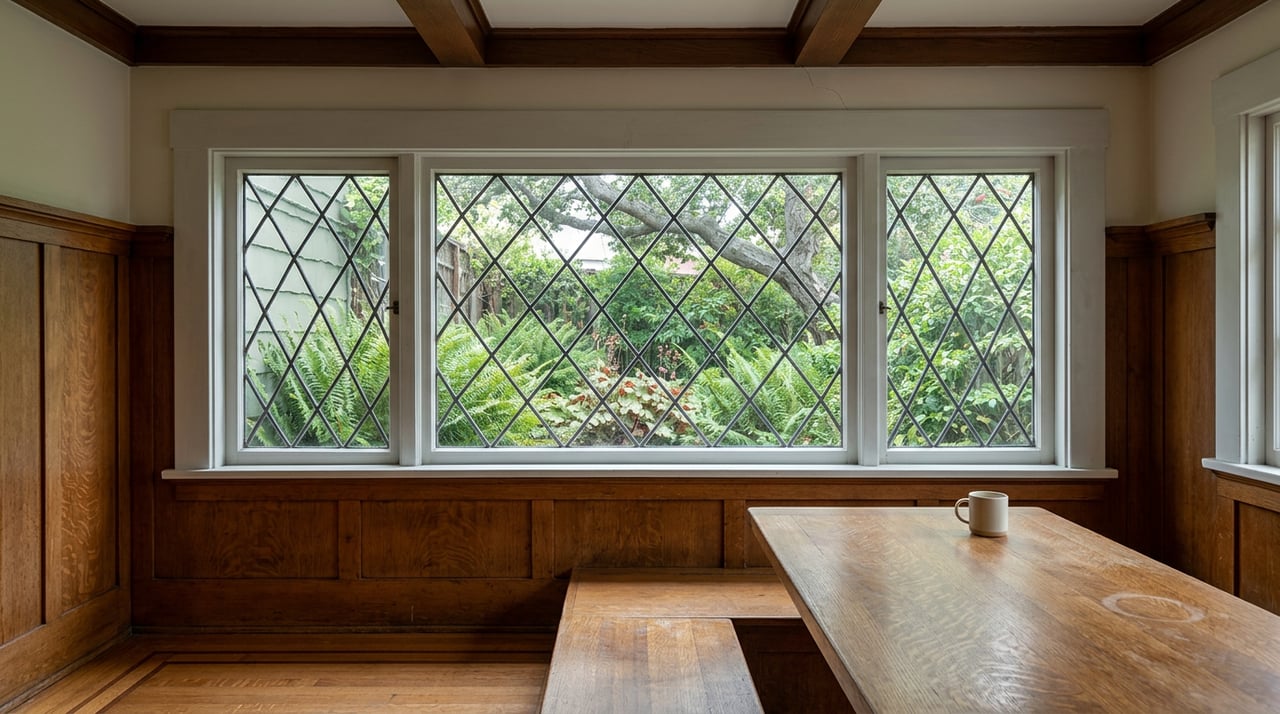
Pasadena Mills Act Property Tax on Historic Homes
August 20, 2026
August 20, 2026
How does a $8.6 million estate on Hillcrest Avenue end up with a property tax bill smaller than what a much cheaper home nearby would pay under a standard resale? It sounds like a rounding error until you look at the mechanism behind it. When that Pasadena property sold in December 2020 with an active Mills Act contract attached, the new owner's annual property tax stayed under $20,000. Apply California's base 1 percent rate to that same $8.6 million sale price under a conventional reassessment, before a single voter-approved bond or local assessment is added, and you're already past $86,000 a year. That gap is not a clerical anomaly. It's the entire point of the program, and it changes how you should read a listing price in a handful of Pasadena's oldest neighborhoods.
If you're comparing a designated historic home against anything else on the market, the sale price on the sign tells you less than usual about what you'll actually owe every October.
For most home purchases in California, the logic is simple. Proposition 13 caps annual increases on assessed value, but a change in ownership triggers a fresh reassessment closer to what you paid. Buy a house for $1.2 million, and your new tax bill gets built around that number.
A Mills Act contract breaks that pattern. Once the City of Pasadena and a property owner sign a Historic Property Contract, and the Los Angeles County Assessor calculates the resulting valuation, that valuation doesn't reset when the home changes hands. The contract is recorded against the title. It runs with the land. A buyer inherits the existing Mills Act assessed value along with the house, not a new number based on what they paid at closing.
That's the part buyers of character homes in Bungalow Heaven, Linda Vista, or Garfield Heights tend to miss. Two homes can sell for the same price on the same block, and the one under an active Mills Act contract can carry a fraction of the tax bill of the one that isn't, purely because of how each is valued for assessment purposes.
The mechanism sits in California Revenue and Taxation Code Section 439.2. Instead of valuing a Mills Act property using comparable sales the way the assessor values everything else, the county uses an income capitalization approach. The assessor estimates what the home could reasonably rent for, applies a capitalization rate, and uses that figure as the taxable value.
There's a catch worth understanding before you assume every historic home is a bargain. State law caps the Mills Act value at whichever is lower: the income-based number or the value the property would have received under standard assessment rules anyway. That means a longtime owner who already benefits from a low Prop 13 base year, someone who bought decades ago, might see little or no additional savings from enrolling. The program is built for the gap between what a home would sell for today and what its rental income supports, and that gap is usually widest right after a sale, when the market price and the old assessed value are farthest apart.
| Valuation approach | What it's based on | What it means for your tax bill |
|---|---|---|
| Standard resale assessment | The price you paid at closing | Resets close to your purchase price, plus local voter-approved bonds |
| Mills Act assessment | Comparable rental income, capitalized and capped at whichever value is lower | Can stay tied to the existing contract's value, regardless of what you paid |
Pasadena itself reports that past participants have seen savings ranging from about 20 percent to 75 percent, averaging near 50 percent. The range is wide because the underlying rental math varies property to property.
Not every charming old house in Pasadena is eligible, and that distinction matters before you fall for a listing photo. To qualify, a property generally needs to be one of the following:
Pasadena also caps eligibility for most single-family homes at a total assessed value of $2 million, with named exceptions for Greene and Greene properties, historic monuments, and individually listed National Register properties. And the city requires a future rehabilitation or maintenance plan as part of the application. A home that's already fully restored, with nothing left to do, doesn't qualify. The program is built to fund ongoing preservation, not to reward a house that's already finished.
This is where the specific neighborhoods come in. Bungalow Heaven, full of Craftsman and California Bungalow homes from the 1900s through the 1930s, became Pasadena's first Landmark District in 1989 and has since been recognized as one of the American Planning Association's "10 Great Places in America." Garfield Heights, one of the city's oldest intact neighborhoods with more than 400 homes, is Pasadena's second Historic Landmark District. Linda Vista, home to roughly 1,400 properties including the mid-century Pegfair Estates tract, sits close to the Rose Bowl and Old Pasadena. Madison Heights, between the South Lake shopping district and Old Town, mixes bungalows with larger estates. Pasadena now has more than 25 landmark districts citywide, and homes within them are the pool where Mills Act eligibility actually lives.
The tax benefit isn't free. A Mills Act contract runs for an initial 10-year term and renews automatically each year, which keeps it perpetually about a decade out unless either party files for non-renewal. Because it's recorded on title, it transfers to the next owner automatically at closing. You don't apply for it as a buyer. You inherit it, along with its obligations.
Those obligations include annual self-certification, plus inspections before a new agreement and every five years after that. Any work affecting historic architectural features needs to follow the Secretary of the Interior's Standards for Rehabilitation, and covered exterior projects require a Certificate of Appropriateness before a building permit can be issued, a review that typically takes about two months. If the city finds a breach of the maintenance plan, it can cancel the contract, and the owner may owe a cancellation fee equal to 12.5 percent of the property's current assessed value.
None of that is a reason to avoid a Mills Act home. It's a reason to read the actual contract before you write an offer, not after.
If you're shopping in Bungalow Heaven, Linda Vista, Garfield Heights, or Madison Heights, the list price answers one question and the recorded contract answers a different one. Ask for the current assessed value from the Los Angeles County Assessor and a copy of the recorded Mills Act contract before you get attached to a monthly payment estimate built only on the sale price.
It's also worth separating two things that get conflated constantly. Landmark district designation on its own doesn't change your assessed value or raise your tax rate. It affects what exterior changes require review, nothing more. The tax benefit only exists if a property has an active, recorded Mills Act contract layered on top of that designation. A home can be historic and reviewed by the Historic Preservation Commission without carrying any tax advantage at all.
For sellers, a well-documented Mills Act contract is a genuine selling point, not a caveat to bury in disclosures. Buyers who understand the market already factor the inherited assessed value into what they're willing to pay. A clean compliance record, permits, self-certifications, any Certificate of Appropriateness approvals, gives a buyer's agent and lender something concrete to underwrite against.
Does buying a Mills Act home reset my property taxes to the price I paid? No. The contract runs with the property and transfers automatically. You inherit the existing assessed value, not a fresh market-based reassessment.
If a home is in a Pasadena landmark district, does that alone lower my taxes? No. Landmark status governs design review. Only an active, recorded Mills Act contract changes how the county assesses the property.
What happens if required maintenance isn't done? The city can cancel the contract, and the owner may owe a cancellation fee equal to 12.5 percent of the property's current assessed value.
Can any old house in Pasadena get a Mills Act contract? No. The home needs designated landmark, historic monument, or contributing status, generally under a $2 million assessed value for single-family homes, with named exceptions, and it needs an actual future maintenance or rehabilitation plan on file.
I spend a lot of my time in Pasadena's older housing stock, and the properties that get misread most often are the ones with a Mills Act contract already attached, or the ones that could qualify for one but nobody's asked the question yet. Understanding what a historic listing actually costs to carry, and what it's worth to preserve, is part of what my contractor background brings to a transaction rather than just a licensing footnote.
If you're weighing a Craftsman in Bungalow Heaven, a Tudor in Linda Vista, or anything with a preservation story attached, I'm happy to walk through what the numbers actually mean before you make an offer. Reach out through Ed Dorini and let's talk through the specifics of your situation.
October 8, 2026

October 1, 2026
September 24, 2026
September 17, 2026
September 10, 2026
September 3, 2026

August 27, 2026
August 20, 2026
August 13, 2026
Ed works very hard for his clients in helping achieve their goals. Ed has the sophistication and experience needed to capture the attention of the affluent buyers you need to reach, negotiate our best deal and manage your transaction to a successful closing.