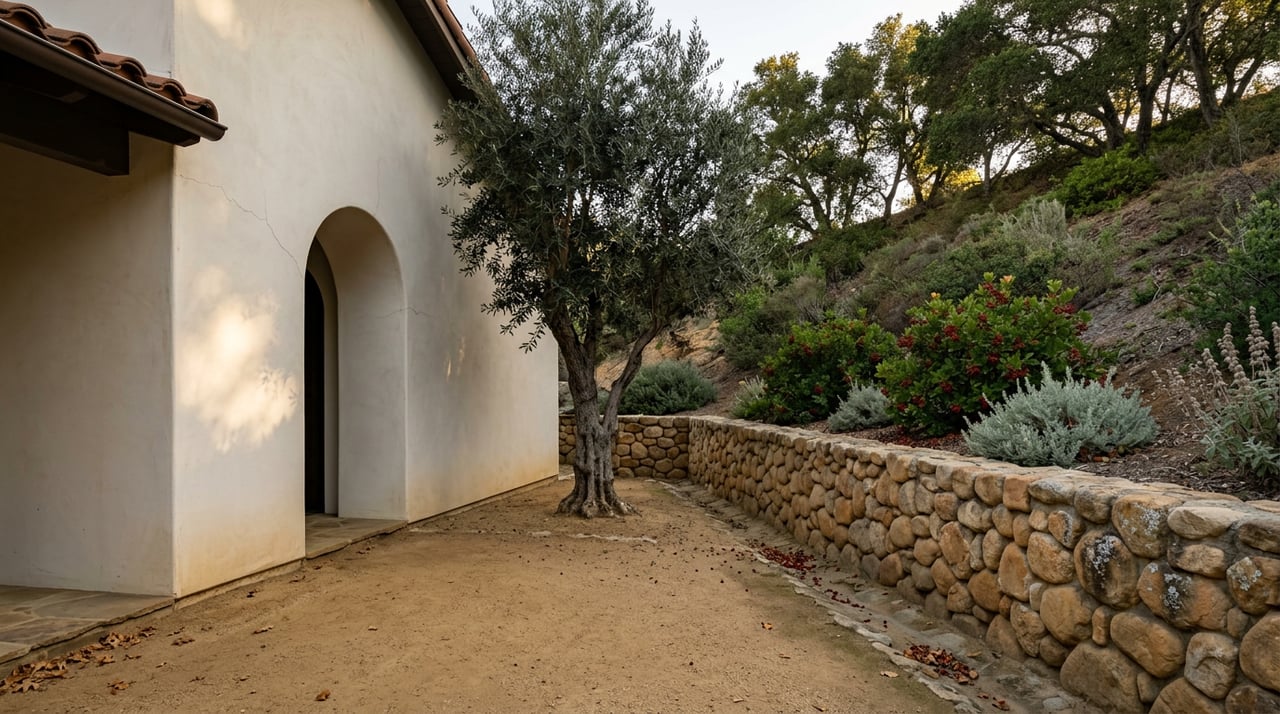
A Guide to La Tuna Canyon Park Trails and Trailheads
August 13, 2026
August 13, 2026
Most people who live along La Tuna Canyon Road have done "the hike" exactly once, decided it was either too easy or too hard, and never sorted out that they were only sampling one of several completely different trail systems that all launch from turnouts within the same mile of road. That confusion is understandable. From the driver's seat, it looks like one road, one gate, one park sign. It is not. It is a junction, and knowing which pull-off you're parking in changes your afternoon by hours.
Here is the piece that gets lost in translation: the first mile or so of La Tuna Canyon Road, before the pavement even runs out, holds three separate trailheads, each feeding into a different piece of the Verdugo Mountains. Between them, those three doors open onto four distinct hikes, since one of the trailheads doubles as the entry point for a much longer traverse that leaves the canyon behind entirely. If you've only ever parked at one turnout, you've seen roughly a quarter of what's back there.
The trailhead most people know sits off La Tuna Canyon Road, maintained by the Mountains Recreation and Conservation Authority across 1,100 acres of park land. That's door one. Door two is a separate dirt lot on the south side of the road, just past the on-ramp for the 210 East, which drops you onto Hostetter Fire Road instead of the foot trail. Door three is a turnout roughly a third of a mile up from the main lot, easy to miss unless you're looking for the picnic tables that mark it.
Three doors, three different trips, all reachable from the same short drive. The confusion is that they share a name in casual conversation. "I hiked La Tuna Canyon" could mean a fifteen-minute walk or a seven-hour push to the highest point in the range, and the person you're talking to has no way of knowing which one you mean unless you specify the trailhead.
Door three leads to the Grotto, and it's the one most people skip because it doesn't look like a real hike from the road. It isn't much of one. The MRCA describes it as a deeply incised canyon with steep walls and overhanging trees that ends at a small waterfall and pool, and a separate hiking guide puts the spur trail up to it at about 0.15 miles round trip from that turnout. It's seasonal. After a wet winter, the rock face glistens and the pool holds water. In a dry stretch, you're looking at damp stone and not much else. Either way, it's a five-minute walk in and out, which makes it the only entry on this list you can do on a lunch break without changing your shoes.
Door one is the moderate 2.2-mile trail that climbs through oak and sycamore-lined canyon before topping out at the ridge, where it meets the Verdugo Fire Road, also known locally as the Backbone Road or Verdugo Motorway. The trail was built in 1989, making it one of the first foot trails cut into the Verdugo Mountains, and the canyon it climbs through still shows the marks of the September 2017 fire that burned nearly 8,000 acres and was, at the time, the largest wildfire inside Los Angeles city limits in fifty years, according to Councilwoman Monica Rodriguez's district office. The exposed upper sections and the chaparral regrowth you're walking through are a direct result of that fire, not a design choice.
At the top there's a bench facing west, positioned exactly where the trail meets the fire road. This is where most hikers turn around, and it's a reasonable place to stop. It's also worth knowing that this bench is not the end of anything. It's an on-ramp.
Door two, the Hostetter Fire Road trailhead, is a different animal entirely. It's a 3.5 to 3.6-mile hard-packed dirt climb that gains roughly 1,400 to 1,600 feet before meeting the same Verdugo Motorway at a saddle near the summit. From there it's a quarter mile to the top of Verdugo Peak, the highest point in the Verdugo range at 3,126 feet, capped by a fenced radio tower and, according to hikers who've made the climb, a small memorial bench facing the view. Round trip, this version runs about 7.5 miles with roughly 1,400 feet of elevation change, and it will take the better part of a morning or afternoon depending on your pace.
The two trailheads, Hostetter and the main La Tuna Canyon lot, sit close enough together that you could walk from one dirt lot to the other in a few minutes. But they don't connect at ground level. The only place they meet is up on the Backbone Road, which is the detail that turns "I hiked La Tuna Canyon" from a vague statement into something you can actually picture once you know the geography.
Here's where the local knowledge pays off. The Backbone Road itself runs about thirteen miles across almost the entire length of the Verdugo Mountains, according to the MRCA's own park listing. Count every side trail and fire road connector in the range and hikers who've mapped the whole system put the total closer to 50 miles. Following the Backbone east from the La Tuna Canyon junction, you eventually reach the Vital Link Trail, which drops down into Wildwood Canyon Park in Burbank. Keep going in the other direction and you hit Chandler Motorway, which runs east toward Glendale Community College. In practice, this means the trail behind your house connects, on foot, to trailheads in two other cities without ever touching a road.
That's not a detail you'll find on a trailhead sign. It's the kind of thing you only know if you've either done the long version or talked to someone who has.
There's a second layer to daily life on La Tuna Canyon Road that has nothing to do with elevation gain. Between the trailheads and the freeway interchanges, the road is also home to working horse properties. La Tuna Stables, at 10149 La Tuna Canyon Road, runs a boarding operation with 24-hour on-site management and access to training, veterinary, and farrier care. A short distance away at 9753 La Tuna Canyon Road, Equinox Equestrian Center operates a private facility with a covered arena, an outdoor arena with cross-country obstacles, a galloping track, and direct trail access. Further along the road, Ravensview Ranch offers full-care boarding and in-stable Western riding lessons.
What this means practically is that the same half-mile of road carrying hikers to three different trailheads is also carrying horse trailers to three different barns. It's part of why the neighborhood reads as rural even though it sits inside Los Angeles city limits, wedged between Burbank and Shadow Hills. You are sharing shoulder space with animals more often than you're sharing it with other cars.
Trail condition reports from earlier this summer put the main loop at an "ideal" status as of a mid-July check-in, but the exposed sections on both the La Tuna Canyon Trail and Hostetter Fire Road get genuinely uncomfortable once temperatures climb, since there's almost no shade above the lower canyon. The stretch from January through May tends to be the more forgiving window, when the canyon floor is green and the exposed ridge sections aren't baking by mid-morning. If you're doing any version in summer, early morning or the last two hours before sunset are your realistic options.
If you've done the short loop and still have daylight left, Wildwood Canyon Park and the Overview Trail to Henry Cook Lookout Point are both less than ten minutes away in Burbank. For something lower effort, Brace Canyon Park makes a reasonable spot for a picnic lunch after a morning on the trail, and Hansen Dam Golf Course sits about fifteen minutes out if you'd rather finish the day with something flatter.
None of this requires a plan. It just requires knowing, before you park, which door you're walking through.
If you're weighing a property along this stretch, whether it's the trail access, the horse-friendly zoning, or simply what it means to live somewhere this connected to open space, I'd welcome the conversation. Reach out to Ed Dorini and let's talk through what the canyon actually offers day to day.
October 8, 2026
October 1, 2026
September 24, 2026
September 17, 2026
September 10, 2026
September 3, 2026
August 27, 2026
August 20, 2026
August 13, 2026
Ed works very hard for his clients in helping achieve their goals. Ed has the sophistication and experience needed to capture the attention of the affluent buyers you need to reach, negotiate our best deal and manage your transaction to a successful closing.