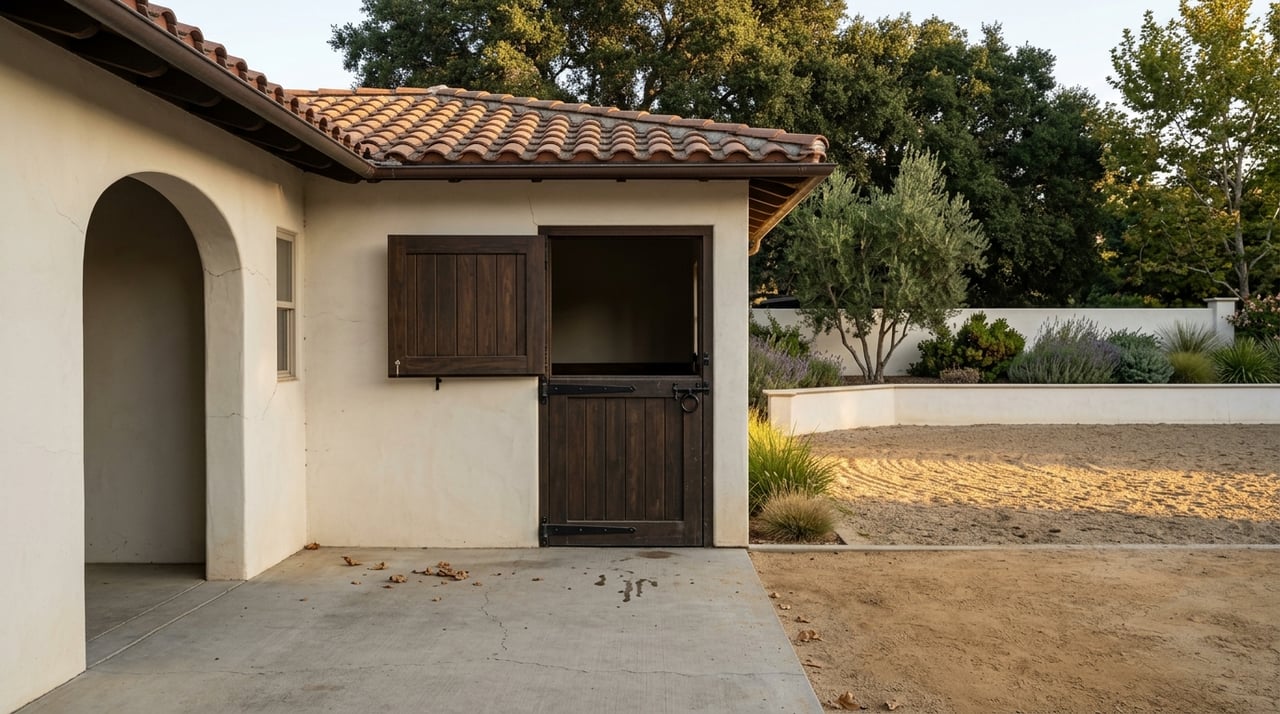
How to Sell Equestrian Property in Shadow Hills
July 9, 2026
July 9, 2026
If you are selling an equestrian property in Shadow Hills, you are not just putting a house on the market. You are selling a mix of land, structures, zoning, and horsekeeping usability in one of Los Angeles’ few remaining primarily equestrian-zoned areas. That can create real opportunity, but it also means buyers will look closely at what is documented, what is permitted, and how the property actually functions. In this guide, you will learn how to prepare, position, and market a Shadow Hills equestrian property with fewer surprises and stronger buyer confidence. Let’s dive in.
Shadow Hills sits in a part of Los Angeles known for its agricultural and equestrian character. City sources describe it as one of the few remaining agricultural zones in the city and one of the last neighborhoods that is primarily equestrian-zoned.
That matters when you sell. In a typical residential listing, buyers may focus mostly on the home itself. In Shadow Hills, many buyers also want to understand horsekeeping rights, trail context, land layout, barn placement, and whether improvements support legal equestrian use.
The equestrian identity of Shadow Hills is supported by actual public infrastructure, not just lifestyle language. City materials reference a contiguous trail system, horse crossings in Shadow Hills and Lake View Terrace, and trail-related work in nearby riding areas.
For sellers, this means equestrian value should be presented in concrete terms. If your property benefits from nearby trail access, horse facilities, or a practical riding setup, those details can help buyers understand the property’s use beyond square footage and bedroom count.
Before your property goes to market, the first step is to verify the parcel in ZIMAS, the City’s property database. ZIMAS includes zoning, overlays, planning case history, building permit history, and code-enforcement records.
This is especially important in Shadow Hills because equestrian properties often have a mix of house improvements, outbuildings, corrals, barns, pens, or enclosures. Buyers in this niche tend to ask detailed questions early, and clear records can make your listing stronger from day one.
Los Angeles Municipal Code Section 13.05 governs K equinekeeping districts. Among other requirements, equine enclosures must be at least 35 feet from habitable rooms, and enclosure placement must follow specific distance rules when a neighbor’s dwelling is nearby.
The code also states that post-1975 K-district lots generally may not exceed one equine per 4,000 square feet of lot area. If your property is in an A2 zone, equine keeping is allowed on lots of at least 17,500 square feet, with a maximum of one equine or bovine per 4,000 square feet, and barns, corrals, pens, and related accessory structures are listed as permitted accessory buildings.
One common mistake is assuming that a small barn, shed, or stall area is automatically acceptable because it has been there for years. Under ZI-2438, some very small equine structures may not require a permit if they stay within size and utility limits, but they still must meet required distance rules.
That distinction matters. A structure may be old, useful, or attractive to buyers, but if setbacks or documentation are unclear, it can become an issue during escrow.
For a Shadow Hills equestrian listing, the paperwork is part of the product. Because ZIMAS shows permit history and code-enforcement information, it makes sense to gather key records before you start marketing.
Helpful items often include:
The more clearly you can show where horses may be kept, where structures sit in relation to the home, and what has been approved, the easier it is for buyers to assess the property with confidence.
A Shadow Hills equestrian property should be marketed as more than a house with extra yard space. Buyers often want to see how the land is configured, how the structures work together, and whether the site supports the kind of equestrian use they have in mind.
That means your listing package should make the layout easy to understand. Clear photos of paddocks, corrals, barn areas, access points, and the relationship between the residence and equestrian improvements can be just as important as interior images.
Trail access is a major selling point in this area, but it has to be described carefully. The City’s Major Equestrian and Hiking Trails Plan identifies Shadow Hills as part of a broader trail network, but it also notes that trail locations are general rather than precise.
In practical terms, you should not imply a private trail right-of-way unless it is documented for your parcel. It is better to describe verified adjacency, nearby public trail context, or neighborhood equestrian infrastructure in accurate terms than to overstate access.
Some Shadow Hills and hillside parcels may also be affected by parcel-specific planning controls that supplement base zoning. City Planning identifies overlays such as the Foothill Boulevard Corridor Specific Plan and the San Gabriel-Verdugo Mountains Scenic Preservation Specific Plan within the broader community plan area.
If your property falls within one of these areas, buyers may want to know how that affects future improvements, additions, or redevelopment. Confirming this early helps you present the property more accurately and avoid last-minute questions.
This is one area many sellers do not expect. Under ZI-2438, for certain lots zoned RA, RE20, RE40, A1, or A2, LADBS will not issue a building permit that creates new habitable space until the Equine Keeping Checklist is completed.
If equine keeping exists on the subject property or an adjacent property, the applicant must provide a dimensioned site plan showing distances between habitable rooms and equine structures or enclosures. LADBS also requires pre-construction inspection verification before work begins.
There is also a separate zoning rule stating that the City cannot issue a building permit for a residential building, excluding non-habitable rooms, if it would be less than 35 feet from a legally established equine use unless an exception is granted. For buyers thinking about additions or redevelopment, this can directly affect future plans.
In Shadow Hills, fire-zone status is not a side issue. It is often central to buyer decision-making, insurance planning, and disclosure obligations.
California’s Natural Hazard Disclosure form specifically addresses whether a property lies in a very high fire hazard severity zone or wildland fire area. The form warns that these hazards can affect development, insurance, and disaster assistance.
LAFD also states that vegetation management is a year-round responsibility. For properties in the Very High Fire Hazard Severity Zone, brush-clearance compliance matters because inspections begin May 1, 2026, and noncompliance can lead to inspection fees, additional fees, or City-contracted work if needed.
If you are planning to sell, brush clearance and defensible-space maintenance should be addressed early. A property that shows ongoing maintenance and clear stewardship often reads better to buyers than one that raises immediate concerns about cleanup, cost, or deferred work.
This is not just about appearance. In this market, fire-zone disclosures and brush conditions are part of the property story from the start.
The cleanest way to market a Shadow Hills equestrian property is to separate features into three categories:
That approach helps buyers understand the property without guesswork. It can also reduce escrow friction, since many of the usual questions in this niche come down to legality, usability, and documentation.
Expect buyers to ask questions like:
These are reasonable questions, and they are best answered with parcel-specific records rather than assumptions.
In a niche market like Shadow Hills, strong presentation is about more than staging and photography. It is also about reducing uncertainty.
When buyers can see a clear site story, understand the zoning, review available records, and evaluate equestrian improvements with confidence, they are often better positioned to make a serious decision. For sellers, that usually means a smoother path from launch to close.
As a longtime foothill real estate professional with contractor experience, I see this kind of preparation as practical risk reduction. It helps you market the property honestly, answer technical questions clearly, and position the sale around what makes the asset truly valuable.
If you are thinking about selling an equestrian property in Shadow Hills, Ed Dorini can help you evaluate the zoning, documentation, presentation strategy, and buyer positioning needed for a well-prepared sale.
September 17, 2026
September 10, 2026
September 3, 2026
August 27, 2026
August 20, 2026
August 13, 2026
August 6, 2026
August 6, 2026
July 23, 2026
Ed works very hard for his clients in helping achieve their goals. Ed has the sophistication and experience needed to capture the attention of the affluent buyers you need to reach, negotiate our best deal and manage your transaction to a successful closing.